
Carbon righteousness: how to lever pro-poor benefits from REDD
A growing focus on mitigating climate change by reducing emissions from deforestation and forest degradation (REDD and REDD+) is prompting the creation of a new form of private property – the ‘carbon right’ – that can be bought and sold in domestic or international markets. But to make REDD+ work for the poor, carbon trading schemes will have to ensure that a wide range of forest-dependent groups and communities benefit.
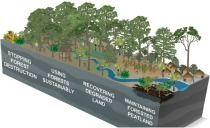
A growing focus on mitigating climate change by reducing emissions from deforestation and forest degradation (REDD and REDD+) is prompting the creation of a new form of private property – the ‘carbon right’ – that can be bought and sold in domestic or international markets. But to make REDD+ work for the poor, carbon trading schemes will have to ensure that a wide range of forest-dependent groups and communities benefit.
In part, this means carefully assessing how carbon rights are assigned – to ensure they support the rural poor who rarely hold formal land ownership or tenure rights but who are key players in putting sustainable forest management into practice on the ground. It also means rethinking eligibility criteria for REDD+ projects so that they include economic, social and environmental standards and co-benefits.
In recognition of the fact that forests in developing countries are key to mitigating climate change, the international community is promoting schemes that reward developing countries and landholders for reducing emissions from deforestation and forest degradation (REDD). REDD+ takes a step forward to also include conservation, sustainable forest management and the enhancement of forest carbon stocks.
While current REDD readiness activities are predominately financed through public funding, the involvement of the private sector would help mobilise a high level of finance in the medium and longer term. Therefore some countries are creating a new form of private property — the carbon (sequestration) right, or ‘credit’ — that can be bought and sold on national or international markets (see Carbon rights in Brazil and Carbon rights in Australia).But thinking about how forests are managed on the ground involves a much wider set of rights than simple ownership of carbon, from land tenure to free movement. And many indigenous and other forest dependent communities fundamentally oppose the idea that a forest’s ability to store carbon can somehow be separated from its wider benefits and functions. There are also widespread concerns that tradable property rights will little benefit the millions of poor poor people that depend on forests for their livelihoods.
What are carbon rights?
REDD+ strategies, policies and programmes encompass a wide range of meanings when it comes to defining carbon rights (see Figure). A narrow understanding focuses on the title of ownership to sequestered carbon as a possible trading commodity. Here, stored carbon is seen as a self-contained, intangible asset with a monetary value — similar to an intellectual property right or a company’s brand value. This type of carbon right is created through law or contract based on, for example, ownership of the land or management activities that reduce emissions, or enhance stocks, of carbon.
Turning carbon into a new form of property in this way supports REDD+ in that it recognises the benefits of maintaining carbon stocks and sequestering carbon in forests.6 But these activities will only generate money if appropriate emissions trading or fund-based compensation regimes are established where carbon rights can be bought and sold. A statutory or voluntary mechanism will play a crucial role in allocating carbon property rights, and governing their transfer and trading.
Full report here, by Christoph Schwarte and Essam Yassin Mohammed.
Christoph Schwarte is a senior lawyer at the Foundation for International Environmental Law and Development (FIELD). Essam Yassin Mohammed is a researcher in IIED’s Sustainable Markets Group.
